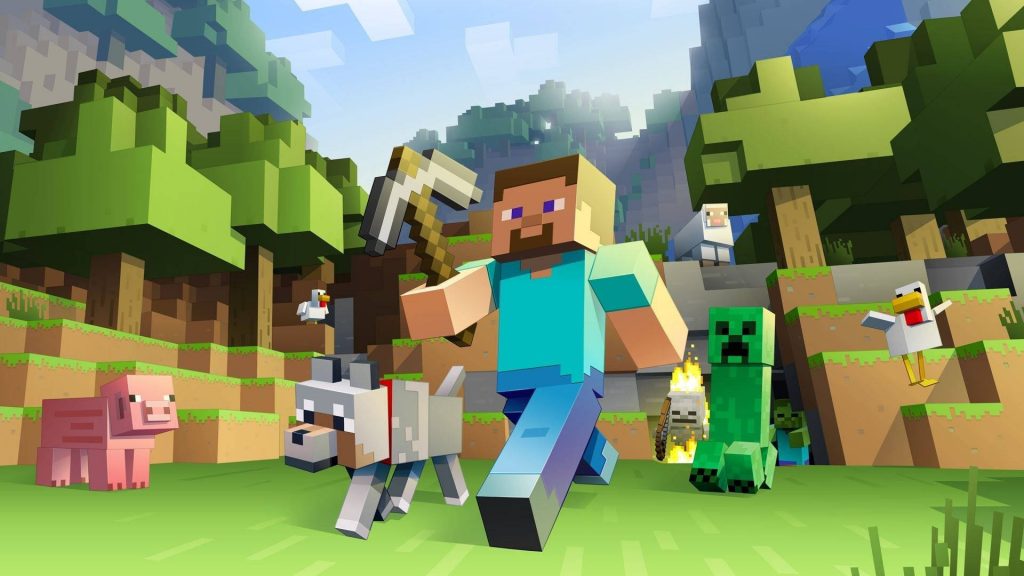
Description:
Minecraft is a sandbox video game where players explore, build, craft, and survive in a block-based, procedurally generated world.
Key Features
- Open-ended gameplay: There are no required goals, allowing players to choose how they want to play.
- Building and creativity: Players can gather resources and use blocks to construct buildings, machines, artwork, or entire cities.
- Survival mode: Players collect resources, craft tools, manage hunger, and defend themselves against hostile creatures such as zombies, skeletons, and creepers.
- Creative mode: Players have unlimited resources and can fly, making it easier to build large projects.
- Exploration: The game contains diverse biomes, caves, oceans, villages, and dimensions to discover.
- Crafting system: Players combine materials to create tools, weapons, armor, food, and other useful items.
- Multiplayer: Players can join servers or play with friends cooperatively or competitively.
Objective
While Minecraft has no fixed ending, many players choose to progress through the game, gather powerful equipment, and eventually defeat the Ender Dragon, a major boss found in a dimension called the End.
Educational and Cultural Impact
Minecraft is widely used for creativity, education, and collaboration. Teachers, students, architects, and hobbyists have used it to create models, learn programming concepts, and develop problem-solving skills.
Originally created by Markus Persson and later developed by Mojang Studios, Minecraft is one of the best-selling video games of all time.